Still Life with Apples
An exploration of shape and color through Cézanne's innovative lens.
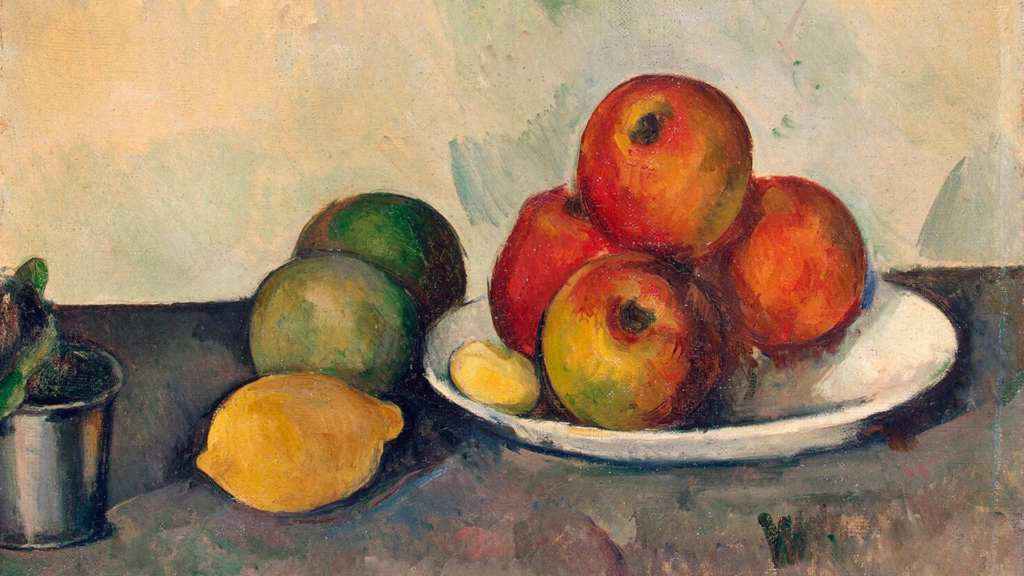
Oil on canvas 68.6 x 92.7 cm • 1895-98
Cézanne's "Still Life with Apples" brilliantly orchestrates form and color, inviting viewers into a world that represents the harmonious blend of natural beauty and artistic invention.
The Composition
- Focal Elements: A medium-sized arrangement of apples rests on a table, layered with earthy tones and the warmth of sunlight.
- Balance and Harmony: The composition showcases a precise balance between the apples, vase, and the surrounding elements, evoking a calm, yet vibrant atmosphere.
Artistic Technique
Cézanne’s approach to still life was revolutionary, marked by:
- Geometric Simplification: He deconstructed objects into basic shapes, achieving a sense of depth and volume.
- Color Modulation: The subtle blending of colors enhances the visual experience and the three-dimensionality of the fruits.
Influence on Modern Art
Cézanne’s innovation in still life painting paved the way for future movements, such as:
- Impressionism: Emphasizing light and color in a distinctive way.
- Cubism: Artists like Picasso drew inspiration from Cézanne's geometric interpretations, redefining how forms and perspectives are perceived.
Conclusion
Through "Still Life with Apples," we glimpse Cézanne's genius in transforming everyday objects into profound explorations of color and form, solidifying his legacy as a pioneer in modern art.
© public domain