Still Life with Apples
An exploration of form and color that redefined still life painting.
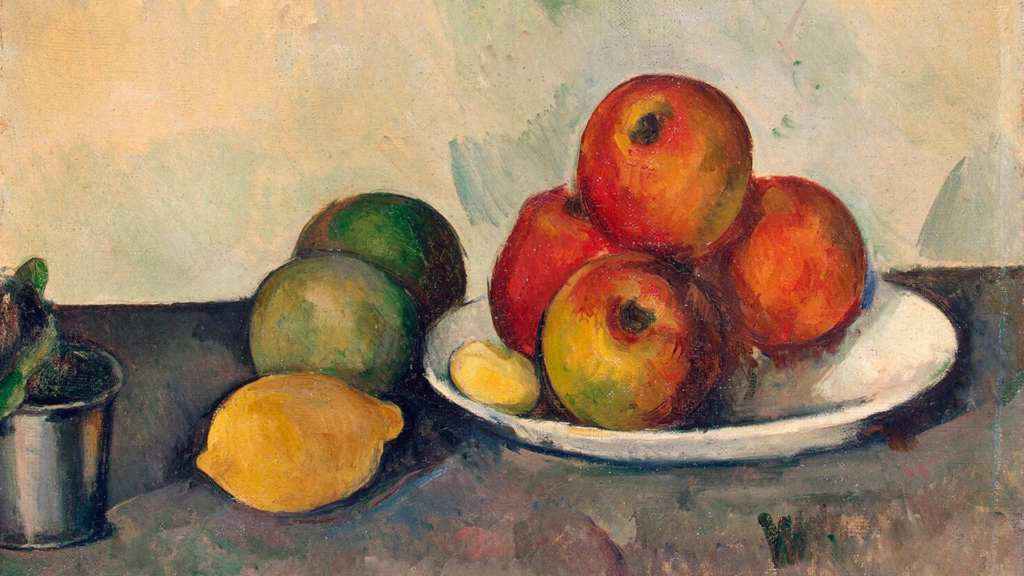
Oil on canvas 68.6 x 92.7 cm • 1895-98
Cézanne's "Still Life with Apples" offers a profound exploration of color and form. This painting reflects the artist's desire to reveal the underlying structures of objects, making it a pivotal work in the evolution of modern art.
The Composition
- A rich arrangement of apples in various shades from red to yellow.
- The use of diagonal lines creates a sense of depth.
- The background features muted tones, allowing the apples to stand out.
Artistic Technique
Cézanne's brushwork is both expressive and tight, creating a unique sense of harmony between the apples and their surroundings. His approach challenges the viewer's perception, emphasizing the importance of geometric shapes and a redefined approach to still life.
Historical Context
Painted during the late 19th century, Cézanne was moving away from impressionism toward a new visual language. This transition was marked by his emphasis on structure and his belief that all forms can be reduced to the geometric shapes of cylinders, spheres, and cones.
Influence on Modern Art
Cézanne is often called the "father of modern art". His innovative use of perspective and color laid the ground for later movements such as Cubism, influencing artists like Picasso and Braque. His works remain a critical bridge between the traditional and the avant-garde.
© public domain